Fiber Fiesta · About the Artist
Marla Okrant
I came to felting through the plainest possible door: felted soap and dryer balls. Ten years later, Fiber Fiesta is what that first experiment grew into.
I taught myself from YouTube videos at first, and once the soaps worked I wanted to know what else wool could do. Online workshops with felting experts came next, and with them two-dimensional wool pictures, laying down fiber the way a painter lays down color. Then wet felting, which is where I settled: structured vessels that stand on their own, pictures for the wall, and scarves light enough to wear in three seasons.
I work from a home studio in Loudon, New Hampshire, and I am in it most of the day. Some of that time is sculpting a character with a single barbed needle, some of it is rolling wet, soapy wool until it shrinks into one seamless cloth, and a surprising amount of it is just looking at a piece to decide what it still needs.
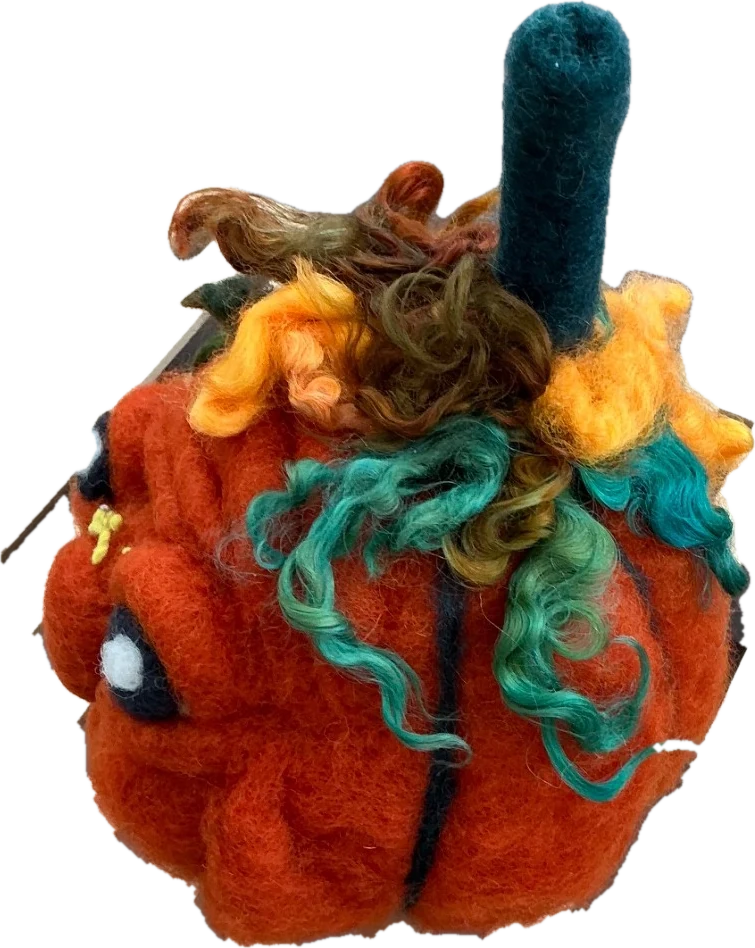
Every piece is built up by hand, layer by layer, with no molds and no glue. That is why no two come out the same, and why a face that started out cheerful sometimes ends up grumpy. I have learned to let it.
I sell my characters in person, at craft fairs and seasonal markets, because the right one is easier to recognize when you are holding it. Thank you for visiting; the shows page lists where I will be next.
The Process
How a Piece Comes to Be
There is no loom, no sewing machine, no pattern. Just wool, a needle or a bowl of warm soapy water, and a great deal of patience.
Choosing the wool
Coarser wool for a firm core that holds its shape, finer wool for smooth faces and colors that blend, and curly locks chosen for exactly how they curl.
Building the core
Roving is rolled tight and needled from every side until it is dense and firm enough to sculpt. This is the slow part — and the part that decides whether the piece lasts.
Sculpting the face
Brows, cheeks, noses, and mouths are added as thin layers of wool and needled into place. A few pokes in the wrong spot and a smile becomes a scowl — sometimes on purpose.
Wet felting the vessels
Layers of wool and silk are wrapped around a flat resist, soaked, soaped, and rolled until they shrink into one seamless skin. The resist comes out through the opening, and the vessel is shaped while still wet.
Why Wool
An Honest Material
Felted wool doesn’t crack, chip, or fray. It is warm, light, surprisingly tough, and it gets a little more character every year it comes out of the box — or stays on the shelf holding the keys.